Monday, 21 January 2019

Submit your Empty Homes Tax declaration by February 4, 2019

 Vancouver-Realtor-CarmenLeal.ca


Must submit your 2018 property status declaration by February 4, 2019.
Only one declaration is required per property.


Each year, every owner of residential property in Vancouver is required to submit a property status declaration to determine if their property is subject to the Empty Homes Tax.
Failure to declare by February 4, 2019, will result in your property being deemed vacant and subject to a tax of 1% of its assessed taxable value.
 There will be no extended declaration submission deadline in 2019.
  1. Jan 1, 2018
    Start of tax year
  2. Dec 31, 2018
    End of tax year
  3. Feb 4, 2019
    Declaration deadline


The information you provide on your declaration will determine if your property is subject to the Empty Homes Tax for this period.

Before you begin your declaration

Your declaration should take approximately five minutes to complete.
You may give permission for someone to submit your declaration on your behalf. 
What you will need:
 Ensure you full fill the requirements of your property status at the time you declare.

Audit process

Property status declarations will be subject to an audit process, in line with best practices for provincial and federal tax programs. If your property is selected for an audit, you will be asked to provide evidence in support of your declaration.
False declarations will result in fines of up to $10,000 per day of the continuing offense, in addition to payment of the tax.

_______________________________________________


Are you interested in selling or buying your home in the next few months? Work with award winning realtor, Carmen Leal and her team that specialize in Real Estate Vancouver and have qualified Buyers that are looking for a home in your area! 604.218.4846 & www.carmenleal.ca


    This communication is not intended to induce breach of existing listing agreement.

Friday, 18 January 2019

How to Decorate Your Home: Part 5 of 5

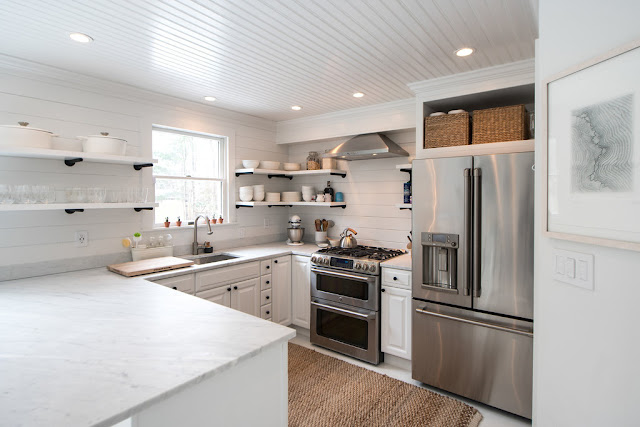
Part 5: Kitchen and Bathroom Ideas

Moving into a new home can be one of life’s great joys, but it can also be a time of uncertainty, especially when it comes to decorating. How do you make your space look its best while reflecting your personal sense of style? Do it well and you’ll end up with a comfortable, happy home. Do it poorly and you’ll end up with a collection of furniture, fabrics and paint colours that never congeal into a pleasing whole. With a little planning, and by following the same steps used by professional interior designers, you’ll have a much greater chance of success.

Interior Decoration: Kitchen and Bathroom Ideas


 Vancouver-Realtor-Carmen-Leal


Customizing these spaces can add personality without requiring a gut renovation.


EVALUATE CABINETS AND COUNTERS

Changing kitchen counters is no small undertaking, but switching from an inexpensive material, like laminate, to a luxurious one, like marble, granite or quartzite, can significantly change the overall appearance of a kitchen or bathroom.
The kitchen backsplash is another area ripe with opportunity. Even if you leave the existing counters in place, you can add or replace an existing backsplash using a favorite tile made from ceramic, glass, metal or cement.
If kitchen cabinets and the bathroom vanity cabinet are simple and in good shape, it’s often possible to paint them a new color for a different look. If the cabinet doors have a design that looks dated, you can sometimes keep the existing cabinets carcasses, and replace the doors only.
In the case of a cheap bathroom vanity, it’s often economical to replace the whole thing. Many companies offer prefabricated vanities, complete with matching tops and sinks.


FOCUS ON THINGS YOU TOUCH


Simply replacing cabinet pulls with new hardware can significantly change the look of a kitchen or bathroom. The kitchen and bathroom faucets are also no place to skimp – you touch them every day, so choose models that not only look good, but also have handles that feel reassuring when you turn them, and heads that offer the functionality you desire. 
In a bathroom, this line of thinking extends to accessories as well – quality towel bars, robe hooks and toilet roll holders can all give the room an upgraded appearance at minimal cost.


REFRESH WITH TEXTILES


There’s no point in having nice towel bars if they’re holding frayed or mismatched towels. Recycle your old ones and buy new towels and washcloths in a single solid color (you deserve it). For a decorative accent, add patterned hand towels. 
If there’s a mildewed shower curtain around the tub, replace it with one made from a pleasing material like linen, or a glass panel.  
If the bathroom or kitchen floor leaves something to be desired, but you don’t want to go to the trouble or expense of tearing it out, you can cover it with a large woven vinyl rug or mat.


DON'T FORGET THE POWDER ROOM

Because it’s so small and used infrequently, a powder room is the perfect place to let your inner decorator run wild with bold colours and wall coverings.  Find a wall treatment you love, and just go for it.
Finally, remember that decorating should be fun. By starting out with a plan, and following the same steps used by the pros, you’ll make the experience significantly less stressful that going at it in a unplanned fashion. And, hopefully, you’ll end up with the ultimate prize: the home of your dreams.


__________________________________________________________________


Are you interested in selling or buying your home in the next few months? Work with award winning realtor, Carmen Leal and her team that specialize in Real Estate Vancouver and have qualified Buyers that are looking for a home in your area! 604.218.4846 & www.carmenleal.ca


 Vancouver Realtor-Carmen Leal


      This communication is not intended to induce breach of existing listing agreement.

Thursday, 17 January 2019

How to Decorate Your Home: Part 4 of 5

Part 4: Bedroom Decor Ideas

Moving into a new home can be one of life’s great joys, but it can also be a time of uncertainty, especially when it comes to decorating. How do you make your space look its best while reflecting your personal sense of style? Do it well and you’ll end up with a comfortable, happy home. Do it poorly and you’ll end up with a collection of furniture, fabrics and paint colours that never congeal into a pleasing whole. With a little planning, and by following the same steps used by professional interior designers, you’ll have a much greater chance of success.

Interior Decoration: Bedroom Decor Ideas


Designed correctly, a bedroom can serve as your nightly sanctuary.


 Vancouver-Realtor-Carmen-Leal


PLAN THE FURNITURE

It’s called a bedroom for a reason: the bed is the key piece of furniture. As such, it should be given pride of place in the room, most likely with the headboard positioned against one wall and paths for walking on both sides. Don’t shove a bed in the corner, if at all possible. They’re impossible to make, and uncomfortable for two people to use.
One exception: children’s bunk beds. Because they already have safety rails that usually only allow access from one side, there’s no reason not to have one in a corner. 
If there’s space, install nightstands on both sides of an adult bed for convenience. They could be simple small tabletops, tables with a single drawer for storing essentials, or something larger. Consider whether you need extra storage space. You can use two dressers for nightstands, to provide space for folded clothing. 
Do you like to watch TV in bed? If so, you’ll want a dresser, cabinet or console table near the foot of the bed that can hold the TV while providing additional storage (unless you plan to mount it on the wall or spring for a motorized stand).

Many designers also like to put a single chair in the corner of a bedroom, not only as a place to rest but also as a landing pad for tossed clothing and personal accessories when you’re in a hurry.


MAKE IT SOFT

Because the goal is to create a space that feels calm and inviting, a bedroom is probably not the place to use bold colours or graphic wallpaper. I would avoid anything that feels aggressive, Even though I like bold colours in my decorating, I like lighter tones in the bedrooms: gentle blues, greens and yellows.
Adding some kind of textile to warm up cold, hard floors – either wall-to-wall carpeting, a large rug that extends underneath the bed or smaller rugs on either side of the bed, and perhaps at the foot of the bed.


MAKE THE BED

There are many different ways to make a bed, and the subject of whether or not you should use a top sheet has been the subject of fierce debate in recent years. Much comes down to personal preference and whether you desire a bedroom that feels casual or formal. 
It’s possible to make a bed with nothing more than a fitted sheet over the mattress, a nice duvet and a couple of pillows. But for something a little more formal, you need more layers.


CONTROL THE LIGHT

The ability to control light – both natural and artificial – is important. 
If you’re sensitive to sunlight when sleeping, you want to have the ability to eliminate it completely. The best way to do so is with a blackout roller shade or a Roman shade with a blackout lining. However, sunlight will still usually leak into the room at the edges of the shade. To block it, add curtains with a blackout lining. 
At night, it’s helpful to have layers of lighting. An overhead light allows you to illuminate the whole room quickly, but may not do much to set the right mood. 
A pair of lamps on bedside tables usually offers a more appealing glow. Many designers use table lamps as well as wall-mounted lamps, either hardwired or plugged into an outlet, on either side of the bed. The table lamps provide an ambient glow, and the wall-mounted lamps provide directional light for reading. It’s nice to have both, but they shouldn’t compete for attention. You want a super simple table lamp and a really decorative sconce, or vice versa. 
Every light should be on a dimmer- good advice for every room of the home.


__________________________________________________________________


Are you interested in selling or buying your home in the next few months? Work with award winning realtor, Carmen Leal and her team that specialize in Real Estate Vancouver and have qualified Buyers that are looking for a home in your area! 604.218.4846 & www.carmenleal.ca 


 Vancouver Realtor-Carmen Leal


  This communication is not intended to induce breach of existing listing agreement.

Wednesday, 16 January 2019

How to Decorate Your Home: Part 3 of 5

Part 3: Dining and Living Room Ideas

Moving into a new home can be one of life’s great joys, but it can also be a time of uncertainty, especially when it comes to decorating. How do you make your space look its best while reflecting your personal sense of style? Do it well and you’ll end up with a comfortable, happy home. Do it poorly and you’ll end up with a collection of furniture, fabrics and paint colours that never congeal into a pleasing whole. With a little planning, and by following the same steps used by professional interior designers, you’ll have a much greater chance of success.

Interior Decoration: Dining and Living Room Ideas


The main living areas, whether they are separate rooms or combined in an open-concept space, set the stage for life with family and friends.


 Vancouver-Realtor-Carmen-Leal


CREATE THE PALETTE

You can see colours, patterns and metal finishes online, but digital images are mere approximations of what the real things look like. Wherever possible, order colour chips, fabric swatches and material samples to be sure finished products will meet your expectations. 
Don’t just look at the samples in isolation. Pin them to a board or put them in a tray to see how well they work together. All greens play nicely together. All blues fight. Putting samples side by side is the way to see if different colours and patterns will live in harmony or tension. 


TREAT THE WALLS

Paint colours are notorious for appearing different hues in different light conditions (and seeming to change between the paint store to home). This effect is only amplified once you slather it on four walls. For that reason, it’s never a good idea to commit to a paint colour when you first see the chip in a store. Look at the largest chip you can get in the room you plan to paint, at a minimum. Better yet, paint large sample patches on walls or on boards that can be moved around and view them at different times of day. 
Note: As long as you test the colour before painting the entire room, there’s no reason to be scared of bold, saturated colours.
Once you have a colour selected, choose the sheen. Matte or flat paints offer a pleasant gauzy appearance that also hides wall imperfections, but can be difficult to maintain, clean and touch up. Ideal: Paint with an eggshell or satin finish that is just slightly glossier and easier to scrub. 
Baseboards, moldings, doors and other trim can be painted the same colour as the room to make them visually recede, or a contrasting colour — usually an off-white in a room with coloured walls — to make them more of a feature. Trim can also be painted with a different sheen than the walls. A semi-gloss sheen will bring more attention to moldings while adding durability. 
You should also decide how you want to treat the ceiling. You can paint it white for a crisp feel, or the same colour as the walls for a cocooning feel. It’s safe to use a matte or flat sheen because the ceiling is rarely touched by dirty fingers or smudge-creating objects. If the surface is perfectly smooth, it can also be painted with a glossy finish as a design feature that reflects light down into the living space. (If your ceilings aren’t smooth, don’t do it — the glossy sheen will only highlight imperfections.) 
For something unexpected, consider looking beyond paint. Manufacturers offer a multitude of alternatives, including patterned wallpaper, grass cloth, upholstery fabrics, wood panelling and even stone and brick veneer.


CHOOSE THE FURNITURE

Working from your floor plan and inspiration images, choose the specific pieces of furniture — the sofas, chairs and tables — that will make the space livable. Depending on the desired vibe, you can go in wildly different directions. 
For a traditional room, focusing on a symmetrical layout often helps — for instance, installing a sofa and coffee table centered on a fireplace, with matching armchairs on either side. A very symmetrical space can be beautiful and formal. On the other hand, if you choose a sectional sofa, it’s probably going to be a less formal space with an asymmetrical layout. 
Seat height is also important. Sofas and lounge chairs in the same room should have seats that are at similar heights to avoid some people sitting much higher than others. In general, lower seats offer a casual, laid back feel, and higher seats come off as more formal. 
Whether the space is casual or formal, there is a rule of thumb to keep in mind: The number of dining chairs should roughly match the number of spaces for lounging. If you’re planning to have 12 people at a dining room table, you should have 12 seats in the living room for entertaining before and after the meal.


HOW THINGS FLOW

No living room sofa or chair should be an island of its own. When people sit down, they almost always need a place to put a drink or book, as well as light to read by. Place a coffee table or end table within easy reach of each seat, along with a table or floor lamp. 
No one wants to stub a toe on a chair leg, so you’ll also want to ensure there are clear walking paths through the living room, and that no furniture blocks part of a doorway or makes it necessary to squeeze by. 
Will your living room have a TV? If so, plan for a wall mount or a media unit to hold it, as well as a path for cables that won’t be unsightly. 
Do you plan to host buffet-style dinners? If so, a credenza or sideboard near the dining table will allow you to serve in one space rather than having guests traipse through the kitchen.


ADD RUGS

A living room with hardwood floors but no rug looks naked. For visual and literal comfort, add a rug.  
There are three common strategies for doing so:
  • A room-filling rug. Install a rug that covers almost the entire floor of the room, leaving a border or just a foot or two at the edges. This usually works best in smaller rooms. 
  • Seating area rugs. Break a larger room down into multiple seating areas by using rugs to visually hold each group of furniture together. Or, in an open-concept space, use a rug to hold the living area together, while allowing the dining area to sit directly on the wood floor. 
  • Layered rugs. Pile smaller rugs on top of a larger one to create extra visual interest while reinforcing the layout of the room. 
Be generous when selecting sizes. A small rug under the coffee table that doesn’t reach the legs of sofas and chairs will look like a raft lost at sea. The rug should extend about halfway, or fully, under the furniture at its edges.


FINISH WITH ART AND ACCESSORIES

The last step to finishing any room is to add art and accessories, but there is no one-size-fits-all approach. In a minimalist space, it might be just a few objects; in a maximalist space, it could involve displaying entire collections and layers of objets d’art. 
Go back to your original inspirational images and study the way those rooms are accessorised. Do they mix candles, boxes, bowls and books together, or is there just one vase on a table? Is there a single artwork above the sofa, or a free-form gallery wall?
Be sure to consider your functional needs. A tray on an ottoman can contain remote controls. Throw pillows provide extra back support for deep sofas and chairs. A magazine rack can keep reading materials out of the way. Attractive baskets are ideal for tidying up children’s toys in a hurry.

_____________________________________________


Are you interested in selling or buying your home in the next few months? Work with award 

winning realtor, Carmen Leal and her team that specialize in Real Estate Vancouver and 

have qualified Buyers that are looking for a home in your area! 604.218.4846 

& www.carmenleal.ca


 Vancouver Realtor-Carmen Leal

Vancouver Realtor - Carmen Leal

  This communication is not intended to induce breach of existing listing agreement.

Tuesday, 15 January 2019

How to Decorate Your Home: Part 2 of 5

Part 2: Entry Ideas

Moving into a new home can be one of life’s great joys, but it can also be a time of uncertainty, especially when it comes to decorating. How do you make your space look its best while reflecting your personal sense of style? Do it well and you’ll end up with a comfortable, happy home. Do it poorly and you’ll end up with a collection of furniture, fabrics and paint colours that never congeal into a pleasing whole. With a little planning, and by following the same steps used by professional interior designers, you’ll have a much greater chance of success.

Interior Decoration: Entry Ideas


The foyer or entrance hall creates the first impression, so make it count.


 Vancouver-Realtor-Carmen-Leal


MAKE A STATEMENT

Don’t hold back. That room is the power moment when somebody walks into
your home. It can say so much about your personality and design taste. 
For that reason, a wall finish that might seem like too much
for a living room or bedroom may be ideal in a foyer. It’s a place where
you can do a bold colour, a lacquer or a wallpaper for a ‘Wow’ moment
that you might be scared of in a large living room.
An added benefit? Statement-making wall coverings and finishes tend
to be expensive, but because foyers are usually small, these products can
often be installed without breaking the bank.


DESIGN TO YOUR ROUTINE

With a few key furniture pieces and accessories, you can make your daily arrival
and departure sequence a breeze. Typically, it's not a huge space, so you're working
with a limited number of pieces. If you’re the kind of person who likes to drop
everything when you walk in the door, a console with drawers is great, because
it’s a nice place to hide your keys and mail. Or, in the absence of drawers, a bowl,
tray, or other sculptural container can serve as a catchall to help keep things
organized. 
A bench or a stool or two that slide under the console can provide a place to sit
while lacing up shoes while taking up minimal floor space. 
Another helpful element is a wall-mounted mirror. It gives you one last chance to
check yourself before you walk out the door.


PLAN FOR THE WEATHER

As the first space people enter when coming from outside, the foyer has to deal 
with a lot – ice, snow, rainwater, mud and whatever else Mother Nature decides 
to deliver. To avoid having these things creep into the rest of the home, you need 
to deal with them at the front door. 
The effort begins even before you cross the threshold. I like to have a mat outside 
the door, so people can wipe off their feet before even stepping inside.
Inside, you can follow up with an indoor-outdoor rug. An umbrella stand
not only keeps umbrellas handy, but also prevents wet ones from draining on the floor.
Storage bins or baskets, which can be stowed under a console 
(if the space isn’t taken by stools), can contain soggy hats and mitts. If your 
foyer doesn’t have a closet, buy coat hooks or a rack. These are all functional pieces 
that can serve double-duty as decorative elements as well.

_____________________________________________________


Are you interested in selling or buying your home in the next few months? Work with award winning realtor, Carmen Leal and her team that specialize in Real Estate Vancouver and have qualified Buyers that are looking for a home in your area! 604.218.4846 & www.carmenleal.ca


 Vancouver Realtor-Carmen Leal
Vancouver Realtor - Carmen Leal

  This communication is not intended to induce breach of existing listing agreement.